
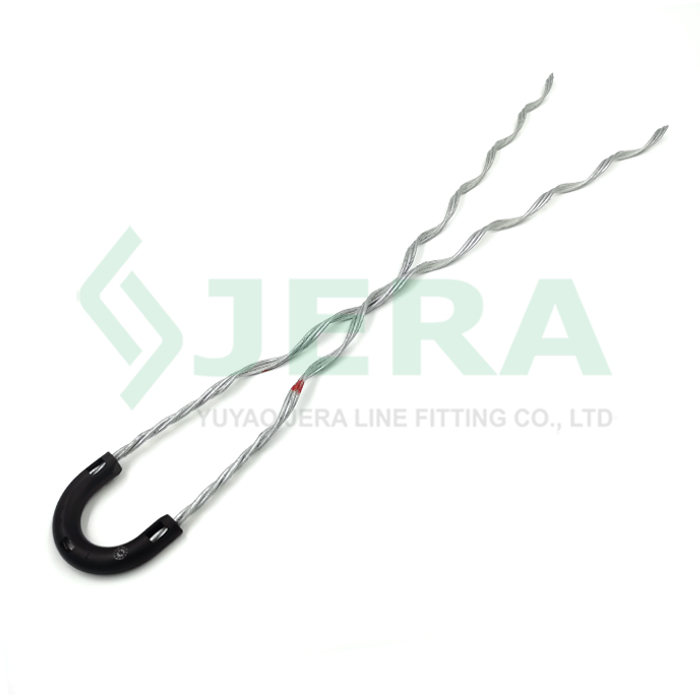
 In terms of dealing with dynamic loads, guy grip dead end can effectively suppress the energy generated by wind vibration and ice dancing phenomena, reduce the vibration amplitude of the cable by more than 60%, and keep the dynamic bending strain value always below the safety threshold of 300 microstrain. Research shows that under the condition of wind speed reaching 30 meters per second, the system using this clamp can reduce the cumulative damage rate caused by vibration by 75%. Referring to the power grid reinforcement project for typhoon protection in the Kanto region of Japan, through the systematic application of the guy grip dead end solution, the power outage duration during the typhoon season was successfully reduced from an average of 8 hours to 1.5 hours, and the network availability was increased to 99.99%, just like installing efficient shock absorbers for the fragile cable system.
Evaluated from the perspective of life cycle cost and risk management, the initial investment cost of a guy grip dead end that complies with UL 486A certification accounts for approximately 3% to 5% of the total investment in a single tower, but it can reduce the probability of emergency repair costs (with an average of more than $50,000 per event) caused by anchorage failure by more than 85%. In its 2022 report, European grid operator Tennet pointed out that in its North Sea offshore wind power grid-connected project, after mandating the use of high-specification guy grip dead end, unplanned downtime caused by connection point issues was reduced by 40%, the annual operating budget decreased by 15%, and the payback period was shorter than four years. This fully demonstrates that taking guy grip dead end as a core risk control strategy can not only enhance the resilience of infrastructure, but also bring significant economic benefits and ensure the continuous and stable operation of critical services for 30 years or even longer.
In terms of dealing with dynamic loads, guy grip dead end can effectively suppress the energy generated by wind vibration and ice dancing phenomena, reduce the vibration amplitude of the cable by more than 60%, and keep the dynamic bending strain value always below the safety threshold of 300 microstrain. Research shows that under the condition of wind speed reaching 30 meters per second, the system using this clamp can reduce the cumulative damage rate caused by vibration by 75%. Referring to the power grid reinforcement project for typhoon protection in the Kanto region of Japan, through the systematic application of the guy grip dead end solution, the power outage duration during the typhoon season was successfully reduced from an average of 8 hours to 1.5 hours, and the network availability was increased to 99.99%, just like installing efficient shock absorbers for the fragile cable system.
Evaluated from the perspective of life cycle cost and risk management, the initial investment cost of a guy grip dead end that complies with UL 486A certification accounts for approximately 3% to 5% of the total investment in a single tower, but it can reduce the probability of emergency repair costs (with an average of more than $50,000 per event) caused by anchorage failure by more than 85%. In its 2022 report, European grid operator Tennet pointed out that in its North Sea offshore wind power grid-connected project, after mandating the use of high-specification guy grip dead end, unplanned downtime caused by connection point issues was reduced by 40%, the annual operating budget decreased by 15%, and the payback period was shorter than four years. This fully demonstrates that taking guy grip dead end as a core risk control strategy can not only enhance the resilience of infrastructure, but also bring significant economic benefits and ensure the continuous and stable operation of critical services for 30 years or even longer.
Filed under Electronics & Semiconductor · About the author
East Coast Sports News